
Picture this. You plug your phone charger, desk lamp, and fan into one socket on a hectic morning. Then you add the hair dryer. The outlet feels warm under your fingers. That’s an overloaded power socket in action. Too much electricity rushes through one spot. It builds heat and sparks danger.
These issues contribute to serious problems. The NFPA reports about 51,000 home electrical fires each year in the US. They cause nearly 500 deaths, over 1,400 injuries, and $1.3 billion in damage. High-draw gadgets, old wires, and poor habits top the list. You will learn the main causes, warning signs, real risks, and easy fixes here. Stay safe with steps that fit your routine.
Top Culprits Behind Overloaded Power Sockets
Overloaded sockets happen when demand exceeds supply. Circuits handle a set amount of power. Most homes use 15-amp or 20-amp ones. That equals 1,800 or 2,400 watts at 120 volts. Exceed it, and trouble brews.
People often plug too many devices into one outlet. High-wattage appliances like space heaters or toasters pull the most. They spike the load fast. Kitchens and bathrooms see this often because families share circuits there.
Older homes add risk. Wiring from decades ago can’t match today’s gadgets. Faulty plugs or worn outlets create resistance. Heat builds from poor connections.
Daisy-chaining power strips worsens it. You plug a strip into a socket, then another strip into that. It overloads the first point. Lack of outlets forces this habit.
Calculate loads simply. Check appliance labels for watts or amps. Add them up. Stay under 80% of your circuit max. For a 15-amp line, aim below 1,440 watts.
Everyday Appliances That Pack a Power Punch
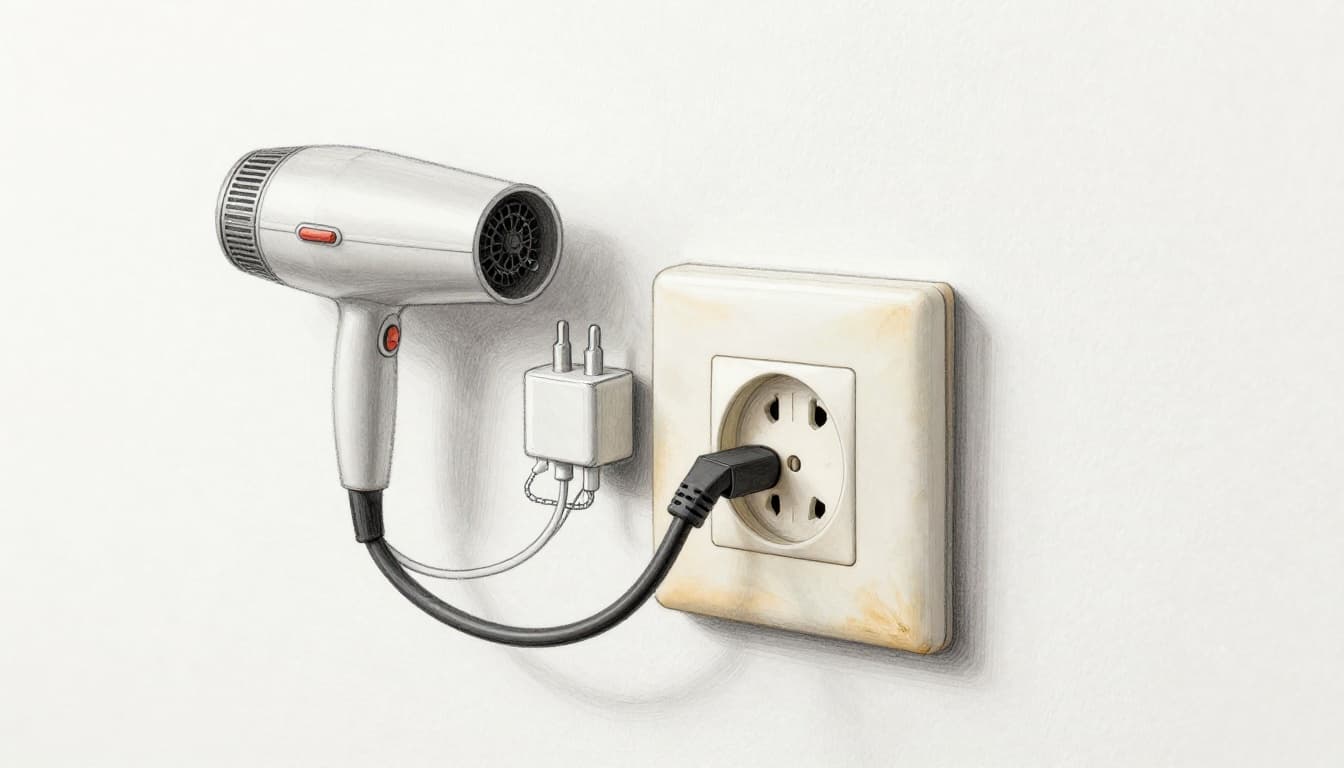
Some items surprise with their draw. Hair dryers hit 1,500 watts. Space heaters reach 1,500 or more. Toasters, microwaves, and electric kettles follow close.
Portable AC units and vacuums pull heavy loads too. Curling irons or clothing steamers add up in bathrooms. Run two at once on a shared circuit. Demand surges.
Kitchens overload easiest. A toaster (1,200 watts) plus microwave (1,000 watts) taxes the line. Check labels first. Add watts before plugging in.
These spikes strain wires. Circuits trip to protect you. But repeated stress wears them down.
Why Old Wiring and Faulty Parts Spell Trouble
Homes built before the 1980s often have thin wiring. It suits old lights and fridges. Modern devices overwhelm it.
Loose plugs fit poorly. They spark and heat up. Corroded wires resist flow. Hot spots form inside walls.
Age shows in brittle insulation. Rodents chew cords too. These faults mimic overloads. They amplify risks from extra plugs.
Inspect visually. Tighten if safe. Call pros for deeper checks.
Spot These Red Flags Before Trouble Starts
Catch issues early. Your home gives clues. Frequent breaker trips top the list. The switch flips when load peaks. Reset once. If it happens often, investigate.
Warm outlets signal overload. Touch the cover after use. Lukewarm feels off. Hot means stop everything.
Scorch marks appear next. Brown or black rings around holes show heat damage. Discoloration hints at melting plastic.
Listen for buzzes or crackles. They come from arcing inside. Burning smells follow. Like fish or wires cooking.
Flickering lights dim when you plug in. Mild shocks tingle fingers. These warn the circuit maxes out.
For more on recognizing overloaded circuits, check home inspection guides. Act fast. Ignore at your peril.
The Serious Risks of Ignoring Overloaded Sockets
Overloads heat wires fast. Insulation melts. Shorts create arcs and sparks. Fires start in walls or behind appliances.
NFPA data drives it home. Electrical issues spark 51,000 home fires yearly. They kill 500 people and injure 1,400 more. Property loss hits $1.3 billion.
Receptacles cause 5,300 fires alone. Overloads rank high among them. Older homes face worse odds. Thin wires fail quicker.
Arcing faults add 28,000 fires. They stem from overload stress. Repairs cost thousands. Fires destroy homes.
Prevention saves lives and money. Simple habits beat disaster. See NFPA’s home structure fires report for full stats.
Smart Strategies to Stop Overloads for Good
Spread the load. Plug high-draw items on separate outlets. Use different circuits for kitchen and laundry.
Upgrade if needed. Electricians add dedicated lines for big appliances. Home offices benefit too.
Balance circuits. Keep under 80% capacity. Map your panel. Label breakers by room.
Add outlets. Pros install safely. Avoid DIY unless skilled.
Inspect yearly. Check for wear. Replace old sockets. Upgrade aluminum wiring in pre-1970s homes.
Power Strips and Extension Cords: Use Them Right
Pick heavy-duty strips. Match ratings to your total load. Plug straight into walls. Never chain them.
Keep cords visible. Rugs pinch and overheat. Unplug when idle. Surge protectors add safety.
Skip them for heaters or dryers. Wall plugs only for those. For tips on safe power strip use, review electrical guides.
These habits prevent most overloads. They cost little but save much.
Quick Action Plan When Overload Hits
Follow these steps right away.
- Unplug everything from the socket. Stop the power flow fast.
- Wait 10 minutes. Let components cool.
- Reset the breaker once. Check if it holds.
- Inspect closely. Look for burns, smells, or damage.
- Test with one low-draw item. Add slowly if okay.
If it trips again, stop. Call a licensed electrician. Old homes or repeats need pro eyes. Fixes often prove simple.
Protect Your Home Starting Today
Overloads stem from too many gadgets and weak wiring. Watch for heat, trips, and marks. Smart spreading and pro upgrades dodge fires.
Inspect outlets now. Tally your watts. Book that electrician if unsure.
Share your close calls below. Stay safe out there.
(Word count: 1,482)