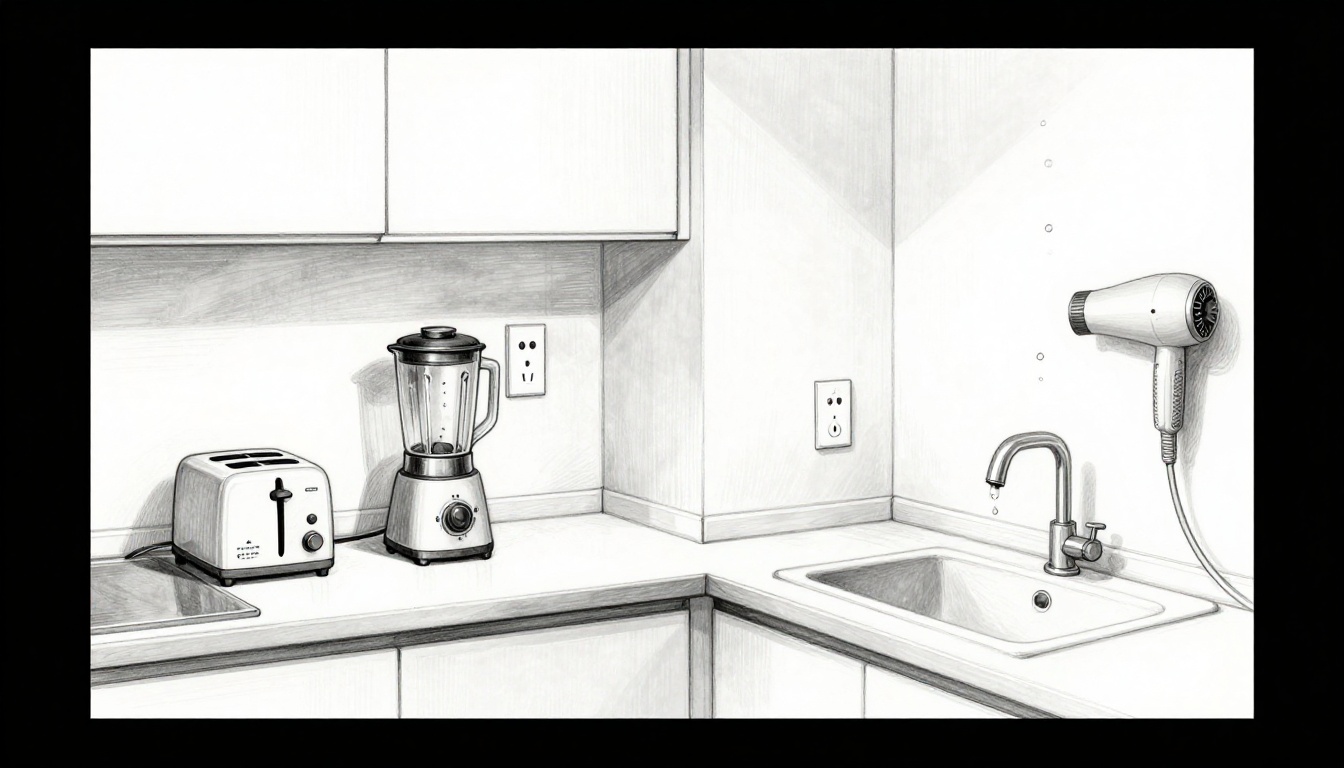
Picture this: you reach for your hair dryer near a steamy bathroom sink, and one slip sends it splashing into water. Shocks like that happen too often because water conducts electricity fast, turning a simple mix-up into a trip to the ER. In fact, US homes face about 51,000 electrical fires each year, causing nearly 500 deaths and over $1.3 billion in damage; kitchens and bathrooms top the risk list since moisture amps up shocks from frayed cords or faulty outlets.
You use toasters, blenders, and curling irons daily in these spots, but poor wiring or ignored wear can spark fires or deliver deadly jolts. Grease buildup and humidity make matters worse. That’s why the 2026 National Electrical Code reinforces rules for GFCI outlets everywhere in kitchens, bathrooms, garages, and more; these devices cut power in milliseconds if faults occur near water.
In this post, you’ll spot common risks, set up proven safety features, pick up daily habits for appliances, and learn quick emergency responses. Follow these steps, and you’ll keep your family safe from shocks and blazes. Ready to protect your home today?
Spot the Top Electrical Risks in Wet Rooms and How to Dodge Them
Kitchens and bathrooms turn into trouble zones when water meets electricity. You grab a blender for smoothies or a shaver after a shower, but one splash changes everything. These electrical hazards in kitchens and baths cause thousands of shocks yearly because moisture lets current flow right through you. Spot the dangers fast, and you dodge most risks with simple fixes.
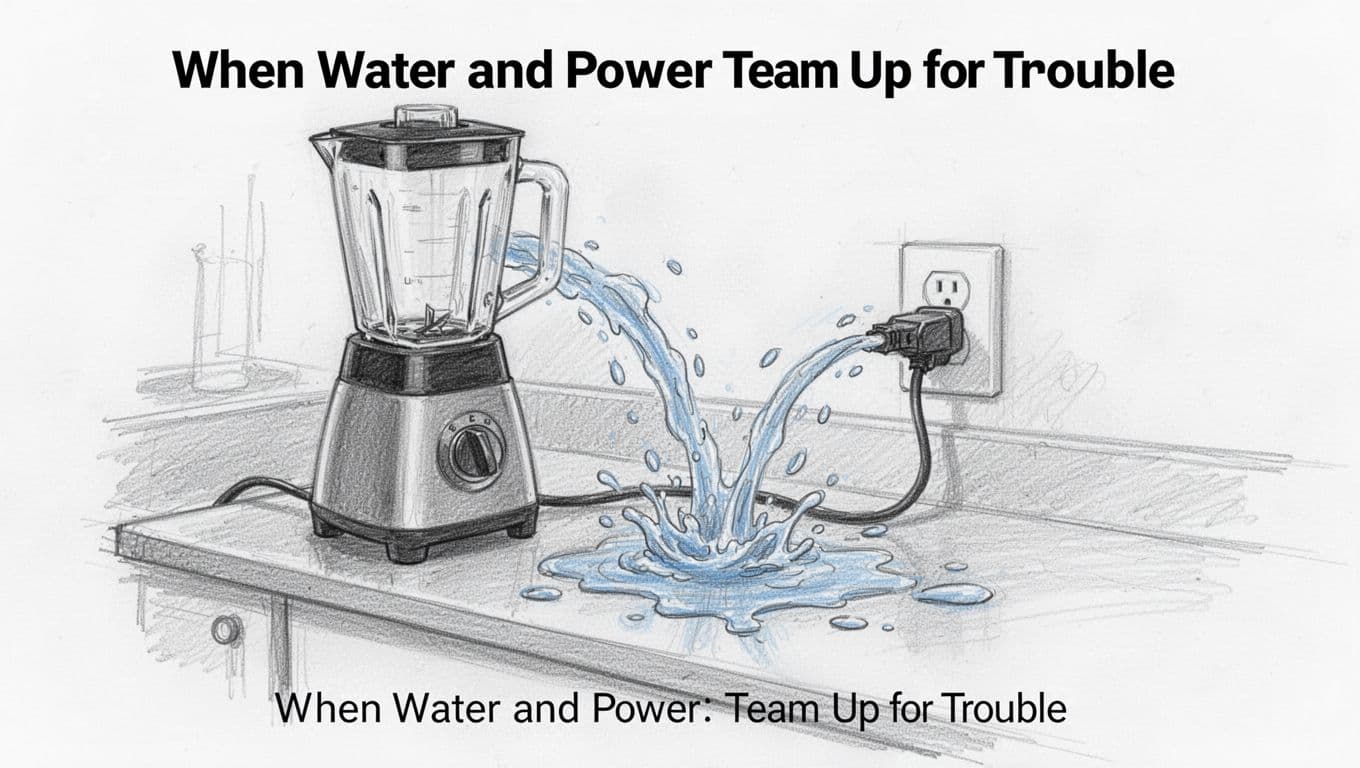
When Water and Power Team Up for Trouble
Water splashes or spills near outlets create instant shock paths. Picture a blender overflowing on your kitchen counter; juice hits the plug, and zap, current races through. Or steam from a hot shower fogs up your electric shaver near the sink. Wet hands on a floor outlet or soaked towels draped over cords make it worse.
GFCIs save lives here. They cut power in milliseconds if water causes a ground fault. The 2026 NEC demands them for all bathroom outlets, no distance limit, and kitchen spots within 6 feet of sinks or on countertops. Check ESFI’s guide on using GFCIs for test steps.
Prevent shocks like this:
- Dry hands, counters, and floors before plugging in.
- Keep devices away from sinks, tubs, or standing water.
- Wipe spills immediately to stop water creep.
No cords over bathtubs ever. Test GFCIs monthly by hitting the button; if it trips, power stays off.
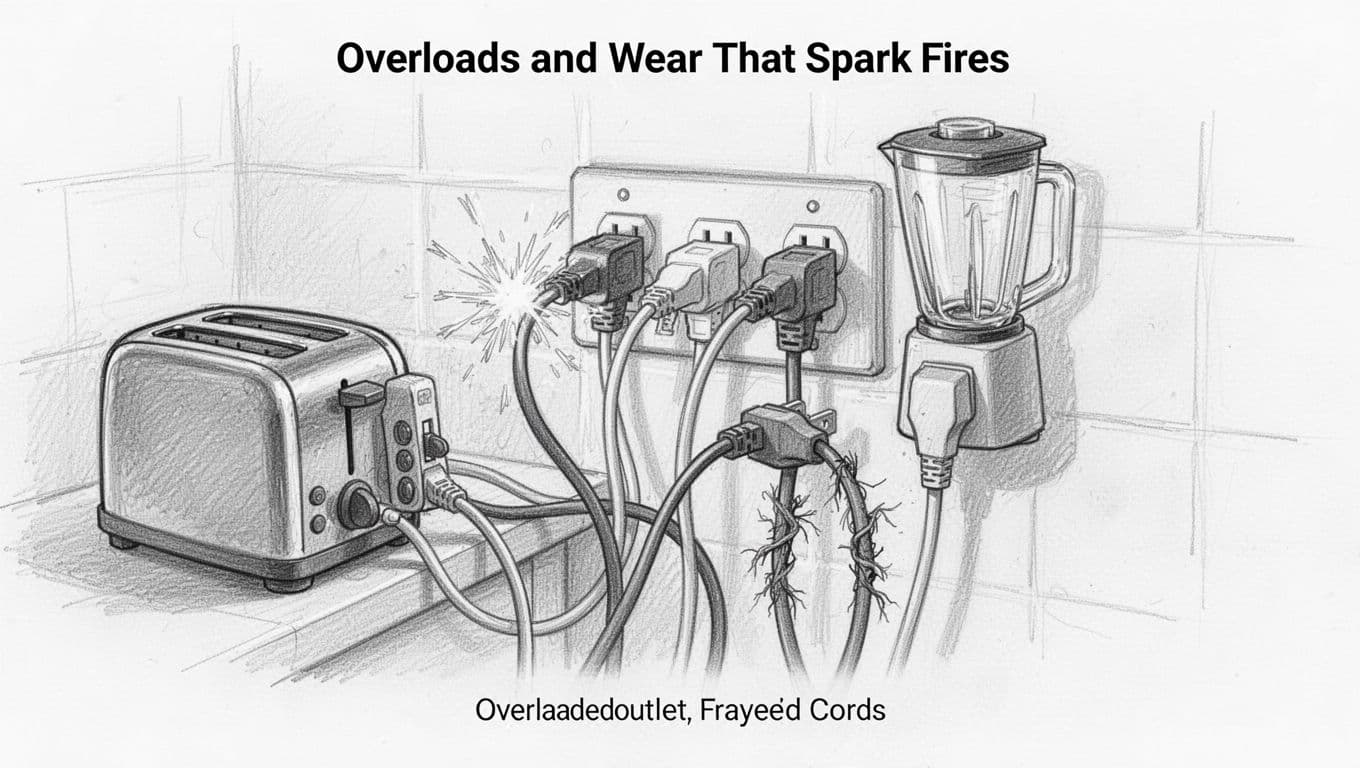
Overloads and Wear That Spark Fires
Circuits overload when you run the microwave and toaster at once. Heat builds, wires overheat, and fires start. Frayed cords hidden under rugs wear out fast in high-traffic spots. Old two-prong outlets lack grounding, so faults turn deadly.
Warm outlets signal trouble; they mean current fights resistance. Kids plug toys everywhere, raising risks.
Dodge these fires:
- Use separate circuits for big appliances like fridges or dryers.
- Inspect cords monthly; toss frayed or cracked ones right away.
- Skip extension cords for heavy loads; plug direct.
Add tamper-resistant outlets to block kids’ fingers. Follow ESFI tips to avoid overloads for your setup. Stay safe, and your home runs smooth.
Set Up Your Home with These Code-Approved Safety Shields
You spot the risks in your kitchen and bath, so now add shields that meet the 2026 National Electrical Code. These setups stop shocks and fires before they start. Start with outlets that cut power fast, then layer on extras for full protection. Follow these steps, and your home stays safe.
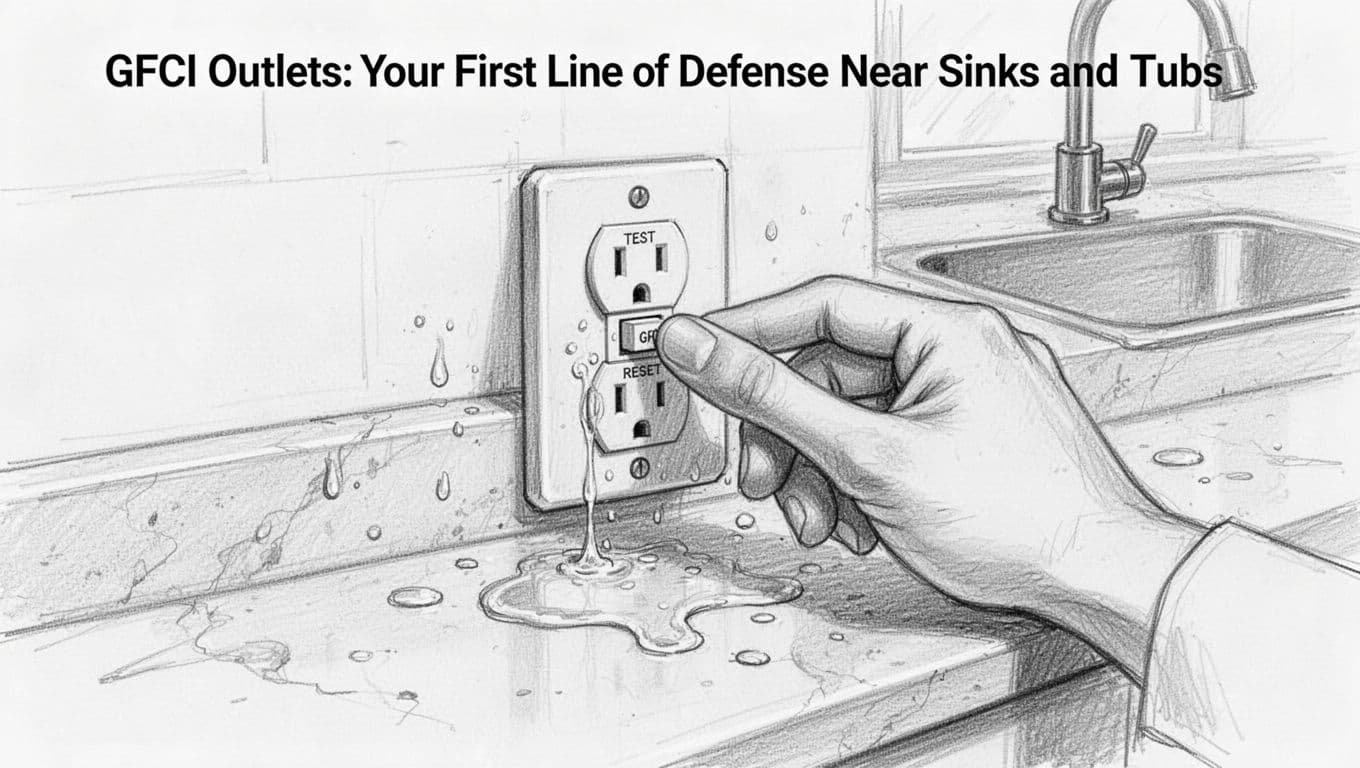
GFCI Outlets: Your First Line of Defense Near Sinks and Tubs
GFCI outlets watch for ground faults. They trip power in milliseconds at just 5 milliamps of leakage. That small amount prevents shocks that kill.
The 2026 NEC sets clear spots. All bathroom outlets need them, no exceptions. In kitchens, cover countertops, islands, and any within 6 feet of the sink edge. Dishwashers get GFCI too. Fridges skip it unless close to the sink. Garbage disposals need protection if under sinks or near counters. Check NEC 210.8 details on GFCI spots for your layout.
Older homes often lack these. Upgrade during remodels. Hire a licensed electrician; they handle wiring right.
Test monthly. Press the test button; it clicks off. Then hit reset. If it fails, replace it.
One GFCI protects outlets downstream. Install the first near the sink or tub. Mount kitchen ones 12 to 18 inches above counters, but never below 24 inches from the floor in some spots.
Benefits stack up. They save lives near water. Plus, they meet code and boost home value.
Extra Layers Like AFCI and Tamper-Resistant Receptacles
AFCI breakers spot arcs that spark fires. Loose wires or damaged cords cause them. The 2026 NEC requires AFCIs on kitchen circuits for 15- and 20-amp outlets. Bathrooms skip this; GFCIs cover shocks there.
Tamper-resistant receptacles block kids. Spring shutters close unless plugs fit right. Code demands them in new homes or updates for kitchens and baths.
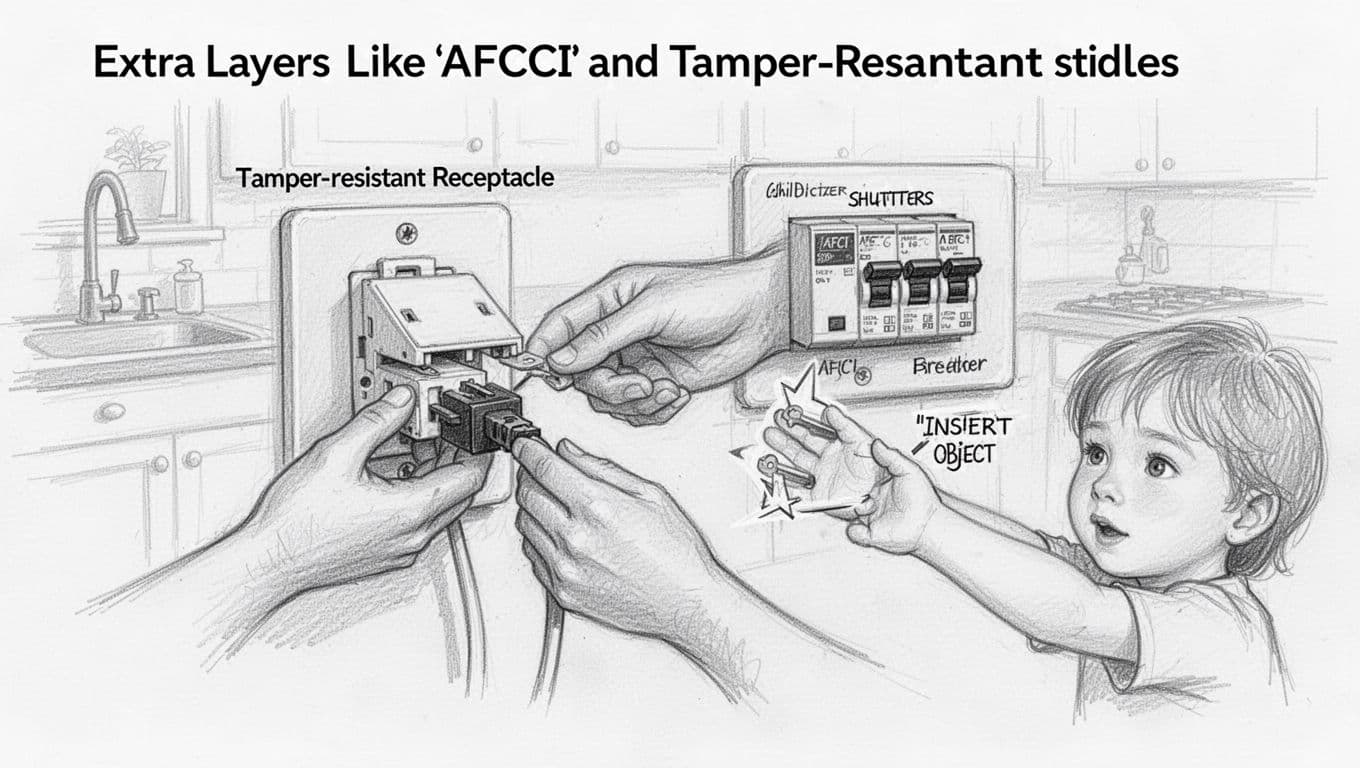
Call that electrician again. They swap breakers or outlets fast.
Quick tips:
- Pick dual AFCI/GFCI for kitchens where both fit.
- Label panels so you find breakers easy.
- Check arcs yearly; replace worn cords first.
These layers work together. GFCIs stop shocks. AFCIs kill fire risks. Tamper-proof keeps little hands safe. Your home runs solid now.
Daily Habits for Safe Use of Toasters, Blenders, Hair Dryers, and More
Build safe routines around your everyday appliances. You flip on the toaster for breakfast or grab the blender for lunch prep, but small slips lead to big problems. Unplug after use. Check cords weekly. Stick to GFCI outlets. Skip extension cords always. These steps cut shock and fire risks fast. Now, let’s break it down by room with tips that stick.
Kitchen Gear That Packs a Punch: Handle with Care
Toasters heat fast, so crumbs build up and spark fires. Unplug yours right after toasting. Keep the surface dry always; water plus heat equals steam shocks. Clean only when unplugged. Shake out crumbs over the sink, then wipe with a dry cloth. No metal inside ever, or you risk a zap. No more fork-in-toaster dares!
Blenders whirl blades at high speed. Unplug before touching parts. Never overload the jar; too much strains the motor and overheats wires. Rinse right away, but empty first and unplug. For fridges, keep cords dry and away from sinks. Test the GFCI monthly since spills happen. Garbage disposals need GFCI protection too; run cold water only to avoid motor strain.
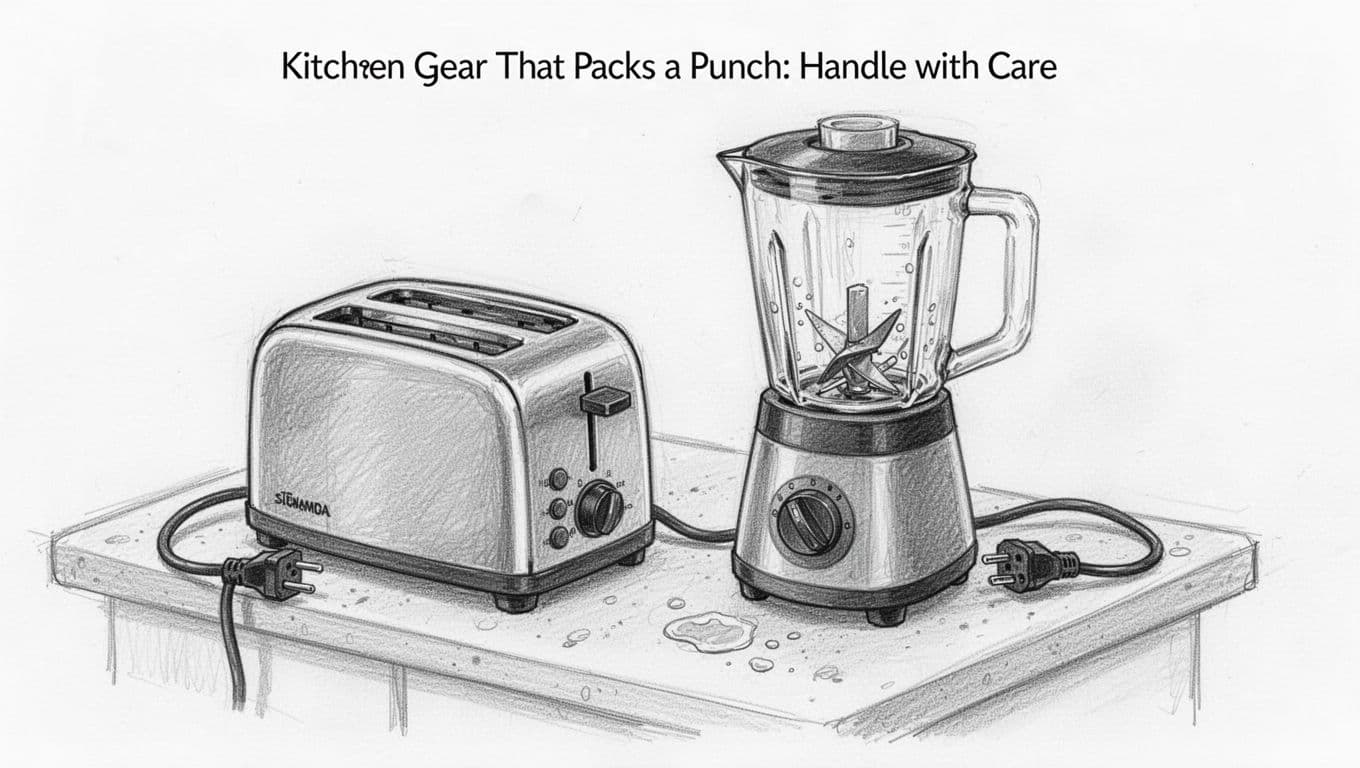
Follow ESFI’s appliance safety tips for more. These habits prevent most kitchen shocks. Inspect cords for frays each week. Replace worn ones immediately. Dry counters before plugging in. Your family eats safer now.
Quick daily checklist:
- Unplug toasters and blenders after each use.
- Clean unplugged only; no liquids near plugs.
- Check for overloads; one batch at a time.
Bathroom Tools: Keep Them Far from Splashes
Hair dryers blow hot air near steamy sinks. Never use them close to water or tubs. Unplug after styling, and store on a dry shelf far from splashes. Use low heat settings to cut burn risks. Drop one in water while plugged? Instant shock. Modern ones have ALCI plugs that trip fast, but unplug rules first.
Shavers buzz smooth, but check the label. Waterproof models handle rinses; others stay dry. Unplug to clean or oil blades. Wipe with a dry cloth, then air dry. No cords dangling near tubs or showers.
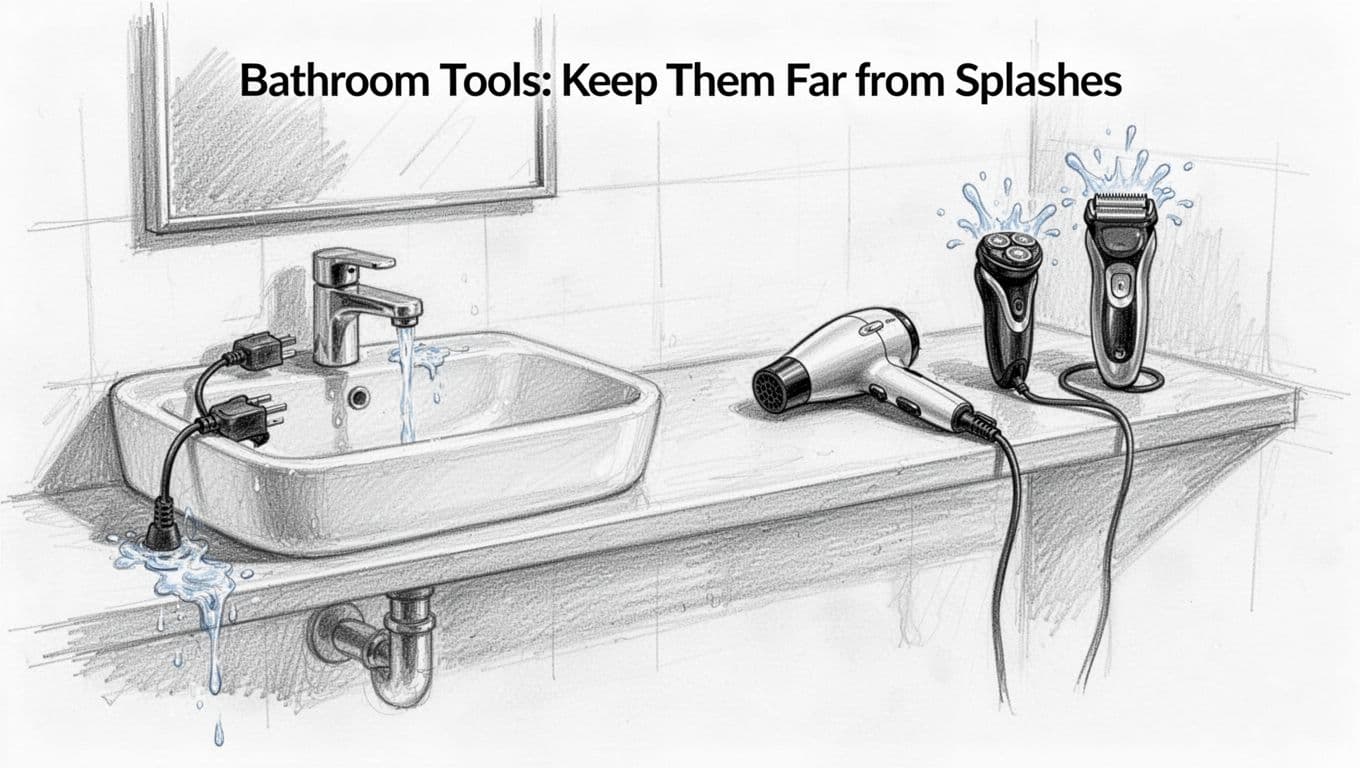
See CPSC cautions on hair dryers for why distance matters. In addition, test bathroom GFCIs often. Cords last longer without moisture pulls. Kids learn by example; show them unplug first.
Daily musts:
- Keep dryers six feet from tubs minimum.
- Unplug shavers before wipes.
- Store high and dry always.
These routines fit easy. You avoid most accidents. Stay consistent, and your home feels secure.
Act Fast: Emergency Steps for Shocks and Fires
Accidents strike quick in kitchens and bathrooms. A frayed cord zaps someone, or sparks fly from an overloaded outlet. You have seconds to act right. Follow these steps, and you save lives. Prevention like GFCIs helps most, but know rescues too. Stay calm, move fast.
Someone Got Zapped? Here’s the Rescue Plan
Don’t touch the person yet. Electricity flows through them. First, cut power safely. Flip the breaker or unplug if you reach it easy. Can’t? Use a wooden broom or plastic chair to separate them from the source.
Next, check if they breathe. Shake gently and shout. No response? Call 911 now. Start CPR: push hard and fast on the chest center, 100 to 120 times a minute. Keep going until help comes.
They breathe? Place them on their side, head back. Call 911 anyway. Shocks hide damage like heart issues. Cool burns with cool water 10 to 20 minutes. Cover loose with clean cloth. Watch for confusion or fast pulse.
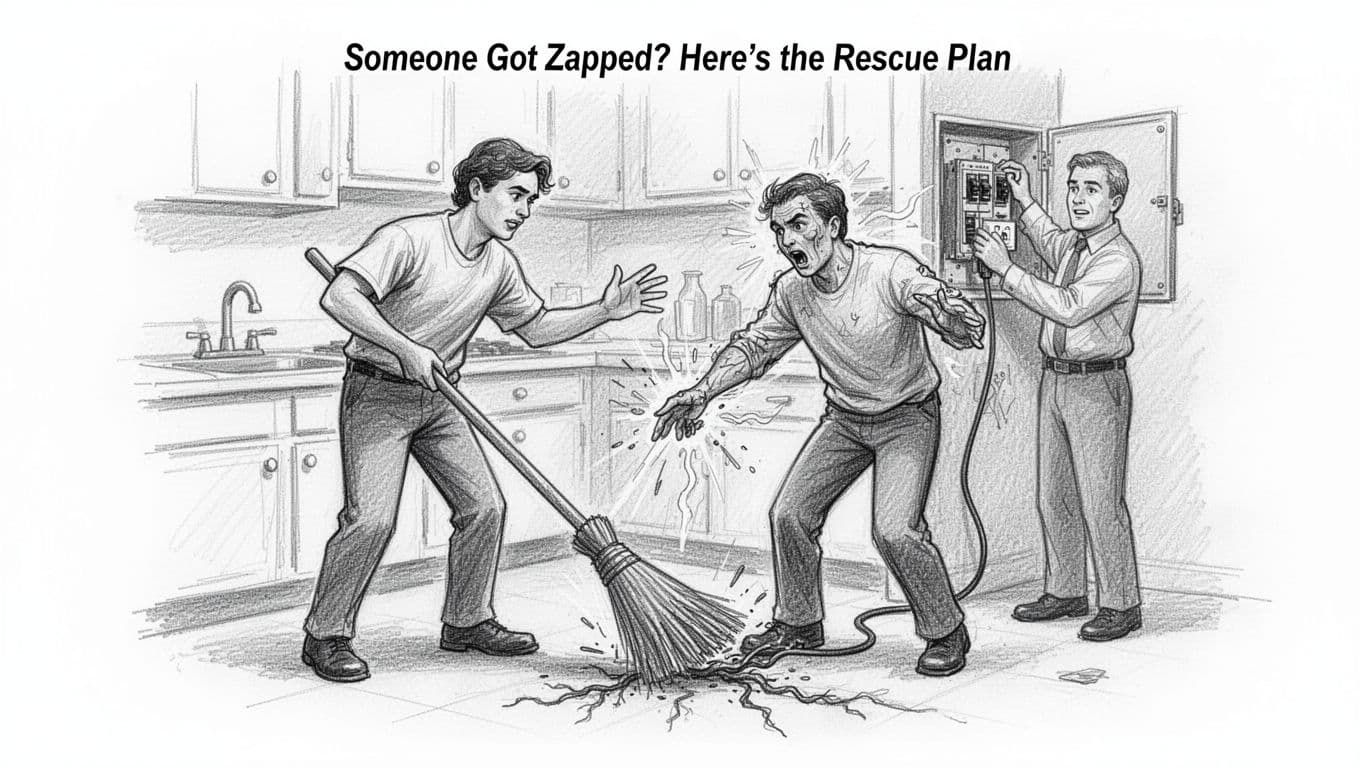
See Mayo Clinic’s first aid for electrical shock for details. Every shock needs a doctor check. Call an electrician after for wiring fixes.
Quick steps:
- Cut power with wood or plastic.
- Check breathing and pulse.
- Call 911; do CPR if needed.
- Cool burns; monitor signs.
Sparks Flying? Fight or Flee Smartly
Power off first, always. Flip that breaker. Small fire, like from a toaster cord? Grab a Class C or ABC extinguisher. Stand back, aim low, sweep side to side. No water; it spreads shocks in kitchens or baths.
Fire grows? Get out fast. Crawl low under smoke. Close doors behind you. Call 911 from outside. Meet at a safe spot.
In steamy bathrooms, grease kitchens, or near sinks, these fires spread quick. GFCIs and AFCIs prevent most, as we covered.
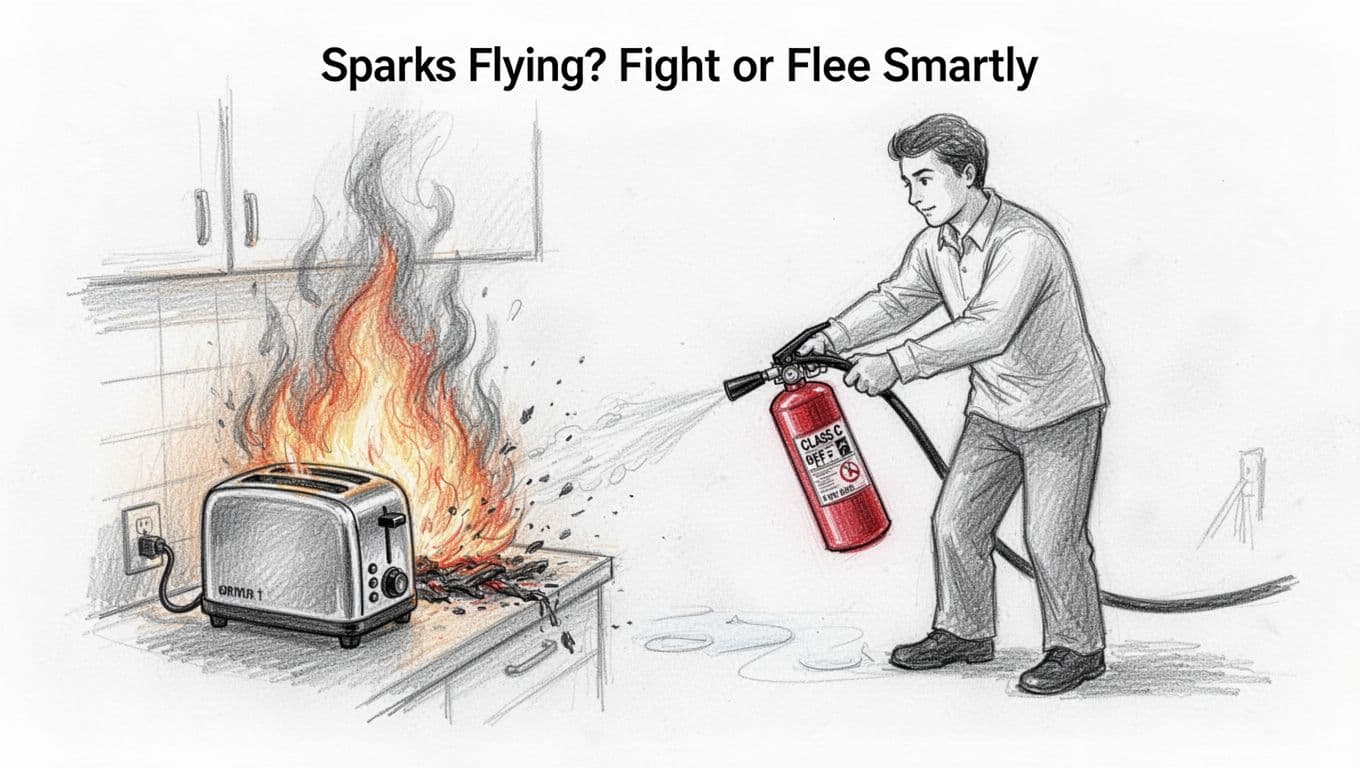
Check NuBilt’s guide on putting out electrical fires for more. After, get pros to inspect wiring. Keep extinguishers handy and checked.
Your plan:
- Small and contained? Extinguish after power off.
- Big or smoky? Evacuate and call help.
- Never use water on live electrics.
Conclusion
GFCI outlets stand as your top shield against shocks in kitchens and bathrooms. Install them everywhere code requires, like near sinks and counters. Test them monthly to keep power cutting fast during faults.
Daily habits seal the deal. Unplug toasters, blenders, and hair dryers after use. Know your emergency moves, from using a broom for shocks to grabbing a Class C extinguisher for small fires.
Test your outlets today. Call an electrician for a full check if needed. Share these tips with family and friends.
Your home can be a safe zone with these simple steps.