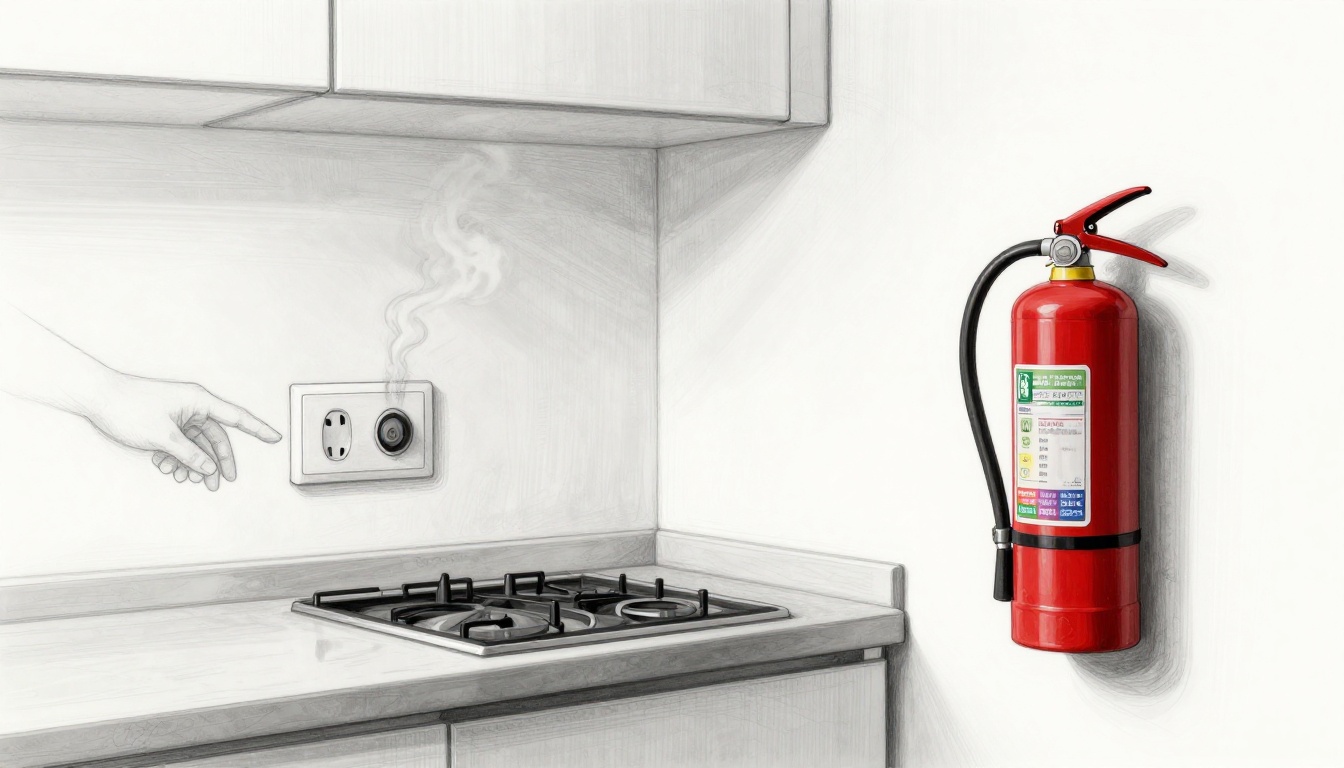
You smell something burning while cooking dinner. It’s not the food. Instead, a sharp, plasticky odor drifts from the kitchen outlet. Your heart races. Electrical fires spread fast because wiring hides flames inside walls. Water makes them worse since it conducts electricity and shocks you.
These fires cause about 44,000 home structure fires each year in the US. They kill hundreds and injure thousands more. But you can act right. This post covers spotting signs early, safe first steps, when to fight small blazes, mistakes to dodge, and prevention tips updated for 2026. Knowledge turns panic into control.
Ready to learn your first move?
Spot These 5 Warning Signs of an Electrical Fire Early
Early detection saves homes. Fires often give clues days or weeks ahead. Check outlets, cords, and panels often. Act fast if you spot trouble.
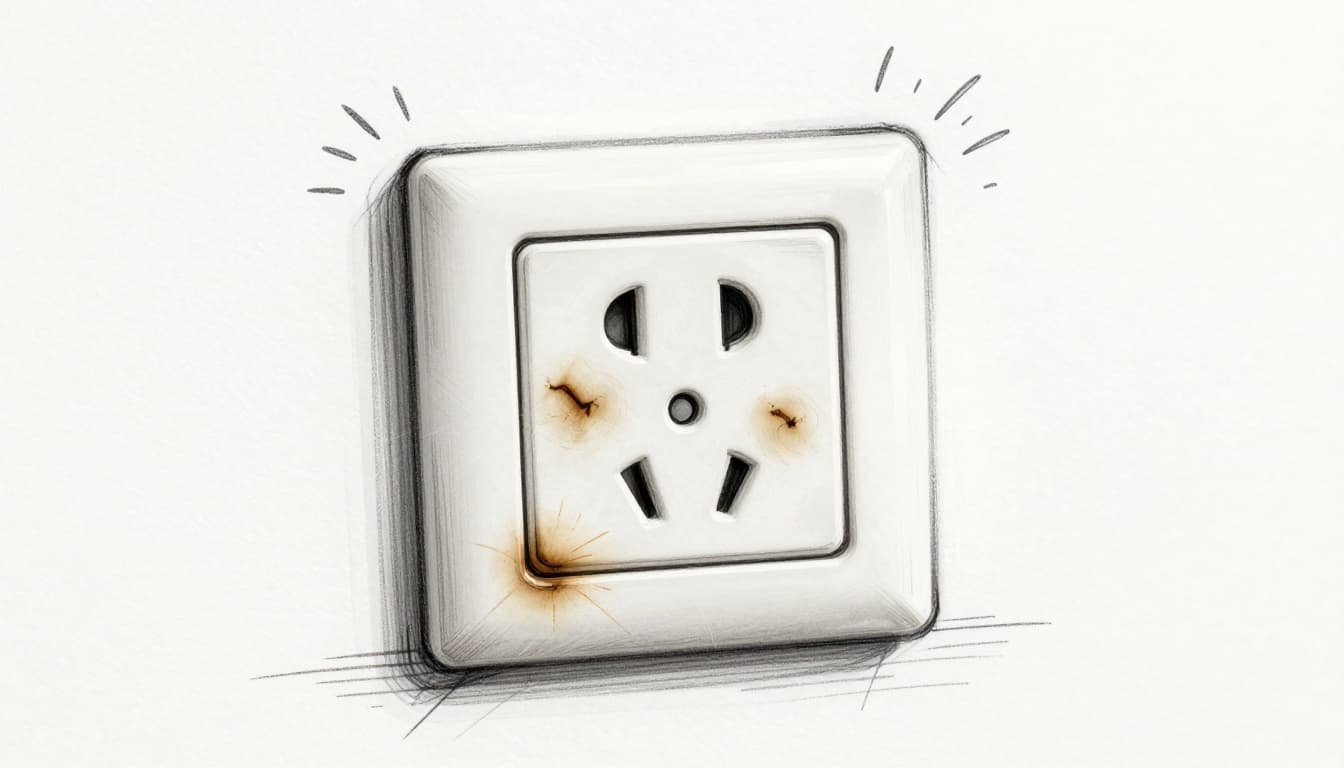
A burning smell hits first. It smells like melted plastic or fish. That’s insulation overheating on wires. Your nose picks it up before smoke shows.
Next, listen for odd sounds. Buzzing, crackling, or popping comes from outlets or appliances. Arcing inside creates these noises. They signal loose connections building heat.
Scorch marks appear too. Look for black spots around plugs, cords, or breaker boxes. Hot spots feel warm to touch. Smoke wisps mean insulation fails.
Lights flicker often. Breakers trip without reason. Sparks fly from plugs. These point to overloads or shorts.
For more on these from experts, see NFPA’s electrical home fire safety tips.
Heard a buzz from your toaster? Check it now. Regular scans empower you. Call an electrician for fixes. Early spots prevent big problems.
Your First Moves: Evacuate Safely and Call for Help
Evacuation beats fighting every time. Lives matter most. Follow these steps in order.
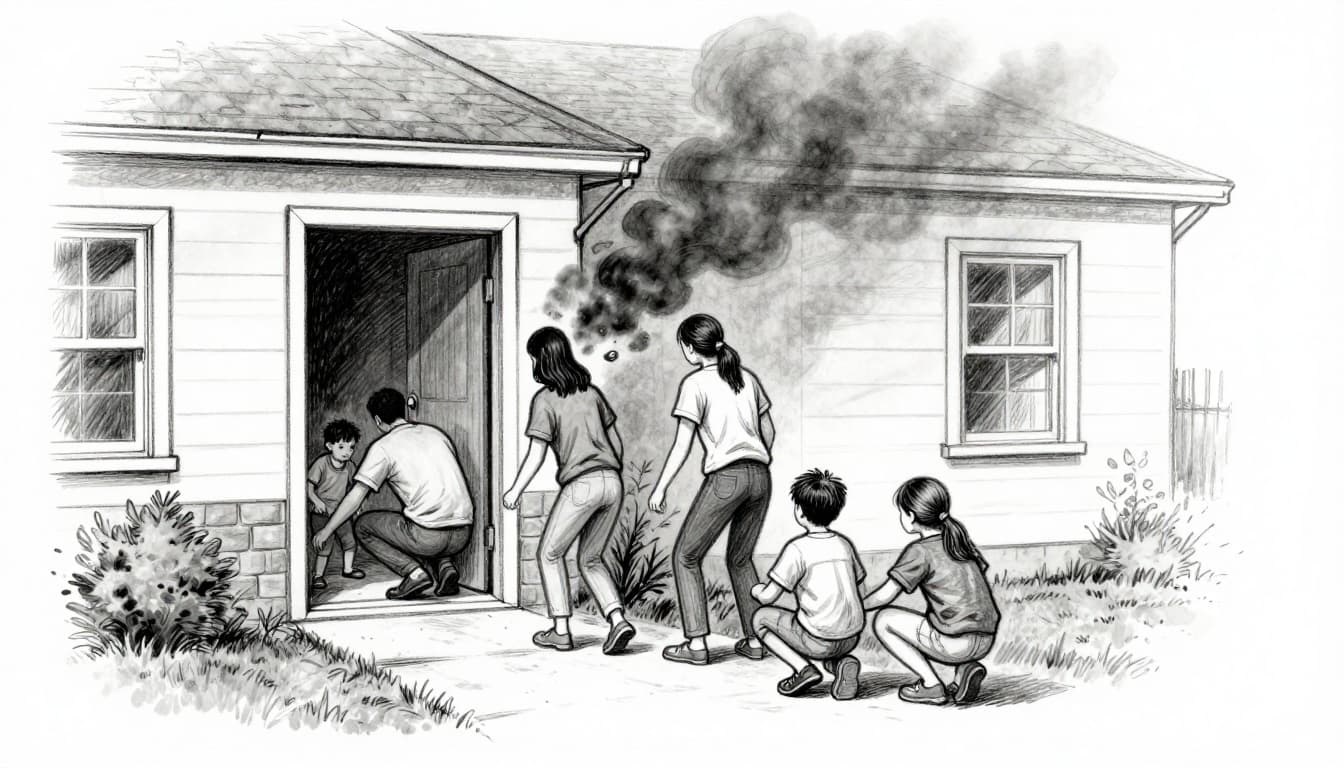
- Get out fast. Stay low under smoke. Smoke rises, so fresh air sits near floors. Crawl if needed. Touch doors first. Hot means fire behind, so use another exit.
- Call 911 once outside. Stay out. Never re-enter for pets or things. Tell dispatch your address and electrical fire details.
- Close doors behind you. This slows fire spread. Meet at a safe spot away from home.
Guidelines from Red Cross and NFPA stress escape first. Pros arrive equipped.
These steps prepare you. Practice a family plan. Feel ready, not scared.
When It’s Safe to Cut the Power Source
Shut power only if flames stay small and you face no risk. Locate your main breaker outside or in a dry basement. Flip it off without touching wires.
Unplug the source if close and dry. Step back after. Skip this if fire blocks path or water pools nearby.
Examples help. A toaster sparks? Yank plug if safe. Appliance cords melt? Breaker first.
Pros handle panels. Call electricians for checks. Safety rules all.
Fight a Small Fire? Grab the Right Extinguisher and Do This
Only tackle tiny fires. Think wastebasket size. Escape clear? You trained? Go ahead.
Class C or ABC extinguishers work best. They use dry chemicals, non-conductive. Water, foam shock you.
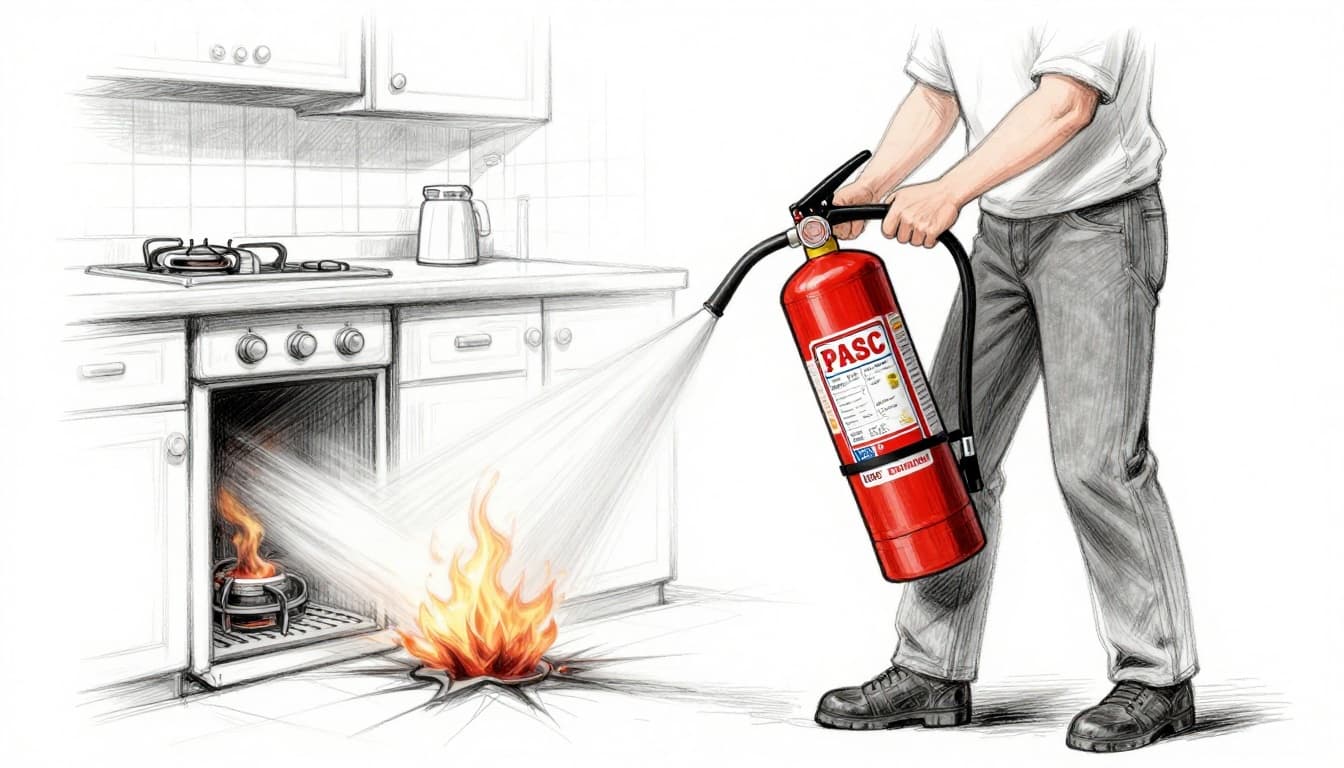
Use the PASS method. Pull the pin. Aim low at fire base. Squeeze handle. Sweep side to side, 6 to 8 feet away.
Back off if fire grows. Escape then. Latest NFPA info backs this approach.
Confident steps save property. Train family too.
Picking and Using a Class C Extinguisher Correctly
ABC covers most homes. It fights ordinary, flammable liquid, and electrical fires. Skip water or foam types.
Buy at hardware stores. Mount near exits, 5 pounds easy. Check monthly.
Demo PASS again. Pull. Aim base. Squeeze steady. Sweep even.
CO2 works in tight spots but cools fast. Stick to ABC for homes.
Practical tip: Test yearly. Right tool builds skill.
5 Deadly Mistakes to Never Make in an Electrical Fire
Don’t use water. It conducts power. You risk shock or spreads fire.
Skip wet hands on plugs. Moisture plus electricity equals danger.
Avoid opening hot panels. Sparks fly out. Heat blasts you.
Wrong extinguisher fails. Water types worsen it.
Never re-enter. Belongings wait. Lives don’t.
Simple science explains. Water paths current to ground, through you. Panels hold live wires.
One story: A man hosed his outlet fire. Shock sent him to hospital. Pros say evacuate always.
Steer clear. These kills happen. Know better.
Prevent Electrical Fires with These Easy 2026-Updated Home Tips
Stop fires before start. Small habits count big.
Install GFCI outlets in wet spots like kitchens, baths, garages. NEC 2026 requires them outdoors to 60A and HVAC units after September.
Use surge protectors everywhere, especially bedrooms. They block spikes.
Replace frayed cords right away. Tape fails.
Test smoke and CO alarms monthly. Add arc-fault ones.
Schedule yearly inspections. Thermal cameras spot hot wires.
Keep flammables away from outlets. Buy UL-listed gear.
Unsure? Call pros. NEC 2026 changes highlight these.
These keep homes safe.
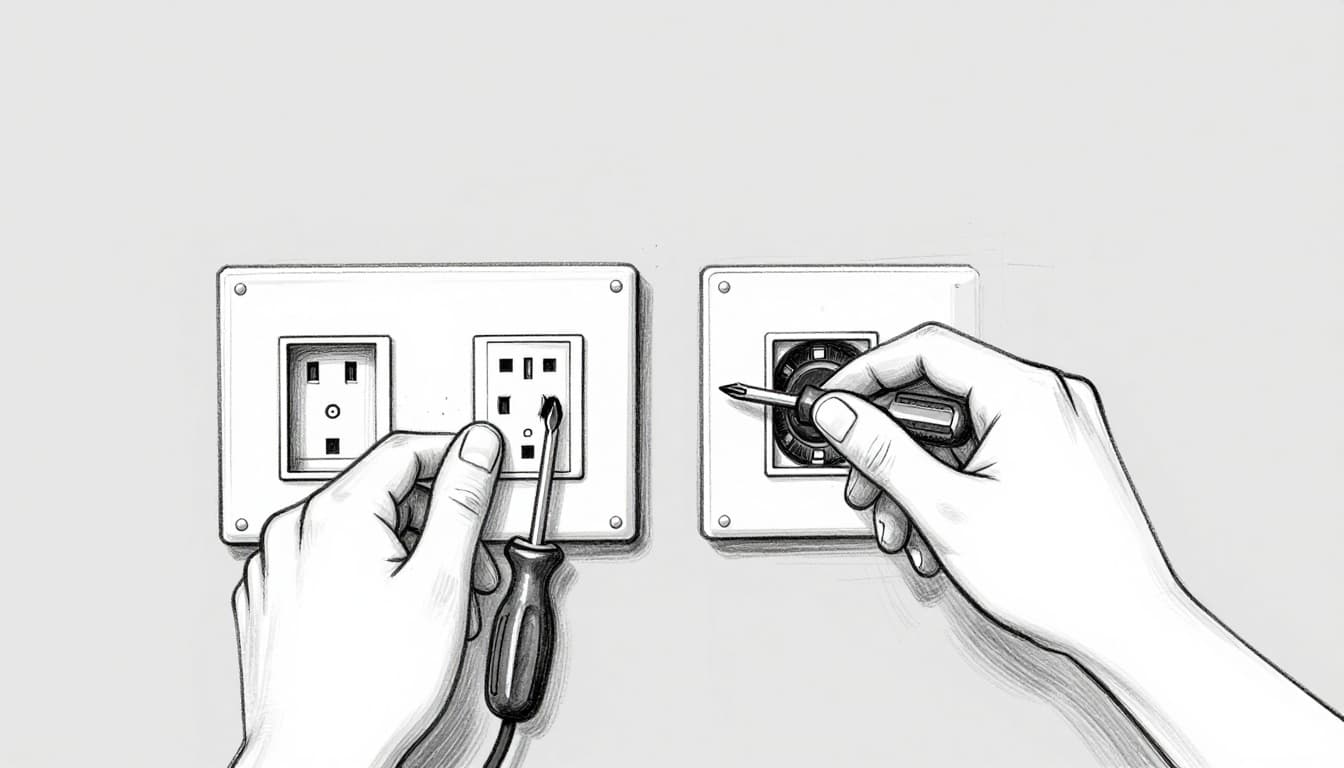
Must-Have Upgrades Like GFCIs and Surge Protectors
GFCIs trip on faults. Install near sinks, outdoors. They cut shocks, arcs.
Surge protectors absorb spikes. Plug chains into one. Whole-home types guard panels.
NEC 2026 adds HVAC GFCIs post-Sept. Covers dorms, standby power.
DIY simple swaps or hire help. Benefits outweigh cost.
Actionable: Check labels. Update now.
Spot signs early. Evacuate first, call help. Fight small ones right. Dodge mistakes. Prevent with upgrades.
Share this with family. Inspect outlets today. Grab an extinguisher if needed. Your prep saves lives. Home feels safer already.